Rosh Hashanah 5785 Day 2
There’s a humorous saying in Judaism: “We Jews believe in one God—at most.” Now, this may elicit a chuckle, but it speaks volumes about the dynamic nature of the Jewish spiritual tradition.
Conservative Judaism embodies a thoughtful openness to modernity, balanced by a profound reverence for tradition. A great example of this balance in action is driving on shabbat – as early as the 1950s, Conservative Judaism permitted driving to the closest synagogue on Shabbat. The reasoning was that being in community and worshipping together was more important than the technical violation of not driving. The need for that communal connection outweighed the strict prohibition.
This tension between tradition and modernity invites us to look at how these themes show up in our texts. Today, I want to focus on the idea of Israel in relation to our reading—the Binding of Isaac.
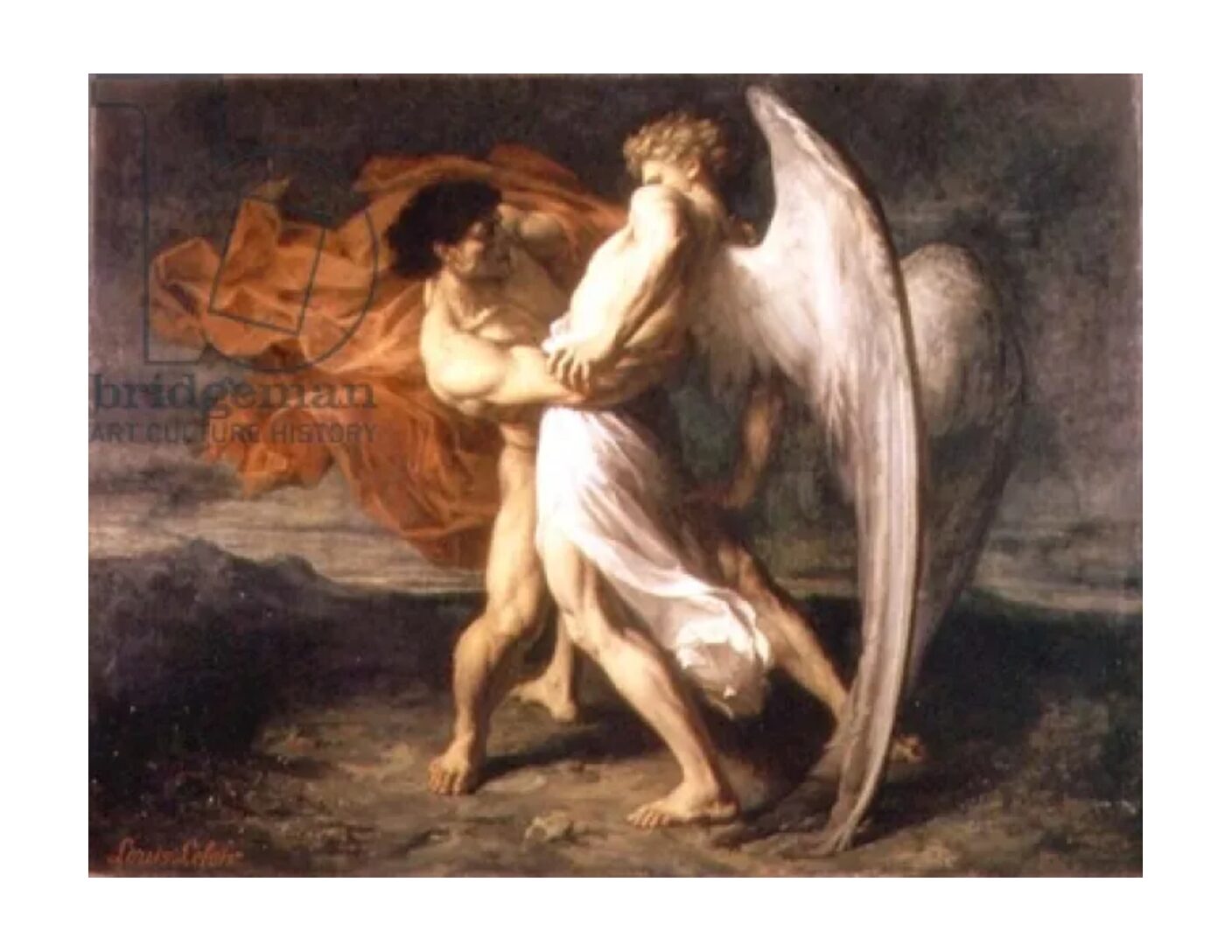
The very definition of Israel is “the one who wrestles with God” – or even “the one who wrestles with God and prevails!” This idea of grappling with the Divine, of not simply submitting, but engaging in a kind of sacred back-and-forth – is so uniquely Jewish, and it is also exemplified most beautifully in Conservative Judaism.
It’s a posture you just don’t find as much in in Reform relativism or orthodox interpretations, which can lean toward rigid dogmatism. You don’t see any of it in Christianity or Islam. In Christianity, it’s about accepting religious teachings through unwavering “faith,” while in Islam, it demands complete submission to Sharia law.
But for us, it’s all about this dynamic wrestling with God, this willingness to challenge and question, even as we ultimately submit. And nowhere is this more evident than in the profound and challenging story of the Binding of Isaac, the Akeda.
Here we have Abraham, asked by God to sacrifice his beloved son, Issac.
Now stop and think about that for a moment – this is a command that seems to fly in the face of other divine laws, like “Thou shalt not murder” and the commandment to be fruitful and multiply. And yet, Abraham’s response is one of utter compliance, of radical submission. And he’s willing to go through with this unspeakable act all because he trusts in the will of God.
This test is particularly cruel, especially given that Abraham and Sarah had long awaited their cherished son. By asking Abraham to sacrifice Isaac, God poses a challenging question: What will Abraham do if God takes back a promise that has already been fulfilled? Would he remain loyal, or would he argue with God, as he did for the people of Sodom and Gomorrah?
God knew that Abraham had mastered the art of wrestling with Him. Now, He sought to see if Abraham could also master the art of submission, even when it meant suspending a couple pretty fundamental Divine laws. Shockingly, Abraham passed this test with flying colors. In the process he caused great anxiety for his family and to the readers of the story for generations. Some rabbis suggest that Isaac was so traumatized by the experience that he ghosted his father and they even attribute Sarah’s death to the distress caused by this – which frankly, is totally believable.
Abraham showed mastery over both wrestling with the Divine AND complete submission. For this reason Abraham was elevated in the eyes of God because he proved that he had absolute control over his will and this actually proves – which may sound absolutely bizarre – that Abraham was a tzadik.
Bottom line – our tradition does not reduce our relationship with God to a simple theory or a rigid contract of laws.
Yes, Halacha, is a cornerstone of our faith and the cornerstone of Conservative Judaism, but our spirituality should transcend this, finding expression in many forms. We are called by God to embrace both complete submission to the Divine and to exercise the freedom to be independent, creative thinkers. Both require significant control over our impulses and the ability to consciously choose our spiritual paths.
When we master both wrestling and submission in our relationship with God, we cultivate a deeper partnership.
This partnership engages all our spiritual and intellectual faculties—faith, compassion, mindfulness, and creativity. While reason, science, and ingenuity are important for understanding and exploring our beliefs, spiritual elements such as prayer, compassion, and acts of kindness play a crucial role in deepening our relationship with the Divine.
Once we develop this ability to both wrestle and submit, we open a unique path for human-Divine collaboration, allowing us to perform magnificent acts that our ancestors just might have called miracles.
As we take time to reflect during this High Holidays period, I invite you to consider these questions: How can I truly engage with Jewish law? In what ways can I maintain my unique perspective on my faith? How can I embrace my independence as a thinker and doer, choosing a spiritual path that resonates with me?
Personally, I don’t believe that God expects us to follow the Divine law strictly in a mechanical way. AFTER ALL THIS IS THE essence of KAVANAH! —which is often overlooked as we plow through the Amediah and our prayer book— Kavanah calls us to engage in a dialogue about these laws and traditions. Kavanah invites us to explore various interpretations of the commandments and encourages us to be co-creators of the Divine order in our world.
We cannot, or at least we should not, ignore the ever-changing reality around us. We should continually rethink ideas that were established in the past, recognizing that not all of them can endure the test of time. Holding onto beliefs that conflict with our current understanding can lead to unnecessary hardships and ridiculous fantasies. Let’s embrace the fundamentals of Conservative Judaism and embrace a living faith that grows and adapts, allowing us to navigate our spiritual journeys with wisdom and compassion.
Rabbi Mirski

Leave a Reply