Category Sermons

Thoughts on parashat Pinchas.
How should we deal with evil? Should we fight back, respond with a poker face or should we demonstrate proper behavior and do the evildoer a good deed in hopes that he will become aware of the wickedness of his behavior and will return to the right path? The answers to these questions
Refleksja nad paraszą Pinchas.
Jak należy postępować w obliczu zła? Czy powinniśmy żarliwie wobec niego oponować? Zachować pokerową twarz? A może odpowiedzieć wykazując się właściwym zachowaniem, etycznym zachowaniem i zrobić dla złoczyńcy dobry uczynek w nadziei, że uświadomi sobie niegodziwość

Thoughts on parashat Balak.
No man ever steps in the same river twice, for it’s not the same river and he’s not the same man, said ancient Greek philosopher, Heraklitus. This great metaphor says that change is at the essence of everything, both in the world of
Refleksja nad paraszą Balak
Żaden człowiek nie wejdzie dwa razy do tej samej rzeki; bo nie będzie to już ta sama rzeka lub on nie będzie tym samym człowiekiem. Ta wielka, wypowiedziana przez Heraklita metafora, głosi, iż zmiana jest istotą wszystkiego, zarówno

Thoughts on parashat Chukat.
“The limits of my language mean the limits of my world,” said Ludwig Wittgenstein, an Austrian-British philosopher of Jewish origin. Very true: it is often the case that we cannot truly understand a phenomenon until we have a linguistic representation.
Refleksja nad paraszą Chukat.
„Granice mojego języka wyznaczają granice mojego świata” – pisał Ludwig Wittgenstein, austriacko-brytyjski filozof żydowskiego pochodzenia. Jest to jak najbardziej trafna konstatacja: bardzo często nie potrafimy zrozumieć jakiegoś zjawiska ponieważ nie posiadamy ku temu odpowiedniego języka.
Refleksja nad paraszą Korach.
Parasza na ten tydzień opisuje zalążek rewolucji, która poniosła całkowitą klęskę. Korach podżega do buntu, kwestionując przywództwo Mojżesza i przyznanie kapłaństwa Aaronowi. W przedsięwzięciu tym towarzyszą mu nieprzejednani wrogowie Mojżesza, Datan i Abiram. Dołącza

Thoughts on parashat Shelach.
Reason, feelings, senses… Since antiquity philosophers, thinkers and writers have wandered about these notions relating to intellectual and spiritual phenomena. What should we follow and when? Are there any general rules in this matter or does everything depend on the situation?
Opinions
Refleksja nad paraszą Szelach.
Rozum, uczucia, zmysły… te pojęcia odnoszące się do zjawisk intelektualnych i duchowych od starożytności nurtowały filozofów, myślicieli, pisarzy. Czym powinniśmy się kierować, za czym powinniśmy iść? Czy istnieją jakieś ogóle reguły w tej kwestii czy wszystko
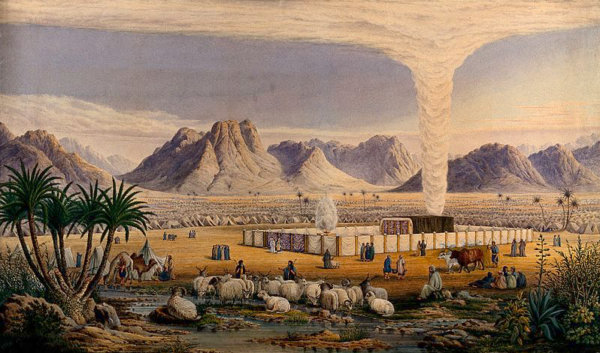
Thoughts on parashat Beha’alotecha
When we look around at the life of our society, we often wonder why these or those problems and injustices take place. We find answers here and there, in the media, in the scientific literature, or
About Rabbi Cantor Menachem Mirski, Ph.D.
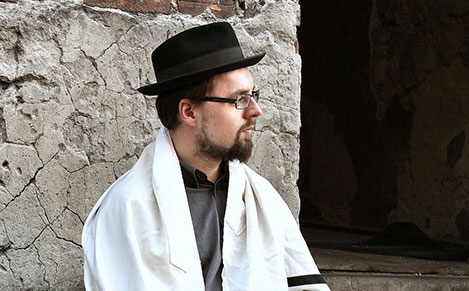
Rabbi Menachem Mirski was born and raised in Poland, where he was a musician, a scholar, and active in helping revive the Jewish community in Poland. While still in Poland, he trained and worked as a hazzan, leading weekly services. He is an accomplished musician, performing in the klezmer scene in Europe and America for well over a decade. At the same time, he earned a Ph.D. in philosophy from the Maria Curie-Sklodowska University in Lublin, Poland. His dissertation was on Jewish Theological Responses to the Holocaust.
Rabbi Mirski’s scholarly pursuits inspire his congregation to delve deeper into Jewish religious concepts and their faith. His passion lies in unlocking the timeless wisdom of Torah and traditional rabbinic teachings to tackle today’s cultural, philosophical, and social challenges. With his gentle and welcoming demeanor, Rabbi Mirski embodies a deep commitment to fostering a tight-knit community and nurturing genuine bonds.
Contact:
Menachem@MenachemMirski.com
(424) 522-9438
Share Your Feedback
Instagram for Temple Beth Shalom
Menachem Mirski YouTube Channel
Donate via PayPal:
Click Here to Donate

Donate via Venmo:
pmirski@aju.edu
Donate via Zelle:
4245229438