Category Sermons
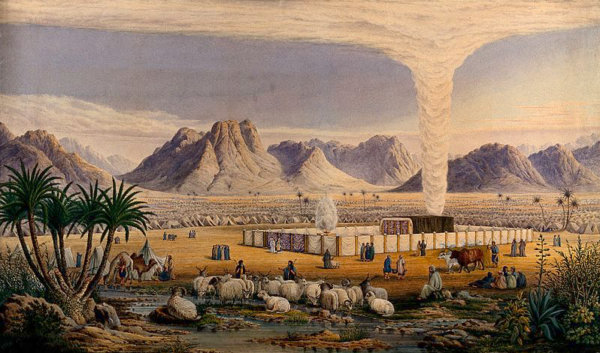
Refleksja nad paraszą Beha’alotecha.
Patrząc wokół, na życie naszych społeczeństw, często zastanawiamy się dlaczego takie lub inne problemy i niesprawiedliwości mają miejsce. Potem znajdujemy odpowiedzi, tu i tam, w mediach, literaturze naukowej czy też w opiniach innych ludzi. Odpowiedzi te są

Thoughts on Parashat Nasso.
Why do people need religion and what is it for? From the traditional, moral perspective the main goal of religion is to provide individuals with the fundamental distinction between good and evil, and to teach them what is right and what is wrong. Another goal of religion is to unite social
Refleksja nad paraszą Naso.
Po co ludziom religia i do czego ona służy? W tradycyjnym, moralnym wymiarze tego zagadnienia celem religii jest dostarczenie indywiduom fundamentalnego rozróżnienia pomiędzy tym co dobre i złe, ucząc przy tym tego co jest słuszne i niesłuszne. Innym, społecznym celem religii jest
Thoughts on parashat Bemidbar.
Life sometimes puts us in difficult and complicated situations, in which we say to ourselves “it will be ok”, and then it turns out that what we feared the most becomes reality. It also happens that we are filled with enormous optimism in these difficult situations, which
Refleksja nad paraszą Bemidbar
Życie stawia nas czasem w trudnych i skomplikowanych sytuacjach, w których mówimy do siebie “jakoś to będzie”, po czym okazuje się, że rzeczywistością staje się to, czego najbardziej się obawialiśmy. Czasem jest też tak, że jesteśmy w tych trudnych przepełnieni optymizmem,

Thoughts on parashat Behar-Bechukotai.
In memory of my father, Zbigniew Mirski
Difficult times come cyclically in our lives. One of such experiences is the death of a loved one. We feel powerless then, because we cannot bring anyone back to life. The closer this person was to us, the closer that persons’ “spiritual
Refleksja nad paraszą Behar-Bechukotai.
Pamięci mojego taty, Zbigniewa Mirskiego
W naszym życiu cyklicznie nadchodzą trudne dla nas chwile. Jednym z takich doświadczeń jest śmierć bliskiej nam osoby. Czujemy się wówczas często bezsilni, nie możemy bowiem nikogo przywrócić do życia. Im bliższa ta osoba

Thoughts on Parashat Emor.
The idea that man was created in the image of God is a fundamental claim about human nature and binds all mankind together as a single race. The very idea is at the same time the foundation of universalist ethics, the only ethics that has a chance to be true, because it is the antithesis of
Refleksja nad paraszą Emor.
Idea, że człowiek został stworzony na podobieństwo Boga jest fundamentalnym twierdzeniem na temat ludzkiej natury i spaja cały rodzaj ludzki jako jedną rasę. Ta sama idea jest jednocześnie fundamentem wszelkiej etyki uniwersalistycznej, jedynej etyki, która ma szansę być prawdziwą,
Thoughts on parashat Acharei Mot-Kedoshim.
Kedoshim tihiyu – You shall be holy (Leviticus 19:2) – thus begins parashat Kedoshim, the second of the two Torah portions for this week. What does it mean to be holy in Judaism? It means
About Rabbi Cantor Menachem Mirski, Ph.D.
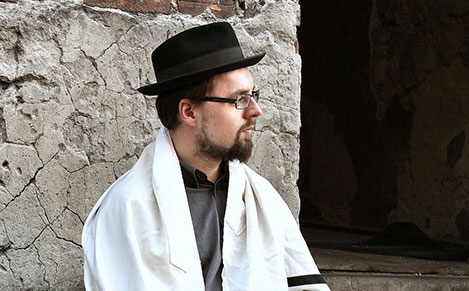
Rabbi Menachem Mirski was born and raised in Poland, where he was a musician, a scholar, and active in helping revive the Jewish community in Poland. While still in Poland, he trained and worked as a hazzan, leading weekly services. He is an accomplished musician, performing in the klezmer scene in Europe and America for well over a decade. At the same time, he earned a Ph.D. in philosophy from the Maria Curie-Sklodowska University in Lublin, Poland. His dissertation was on Jewish Theological Responses to the Holocaust.
Rabbi Mirski’s scholarly pursuits inspire his congregation to delve deeper into Jewish religious concepts and their faith. His passion lies in unlocking the timeless wisdom of Torah and traditional rabbinic teachings to tackle today’s cultural, philosophical, and social challenges. With his gentle and welcoming demeanor, Rabbi Mirski embodies a deep commitment to fostering a tight-knit community and nurturing genuine bonds.
Contact:
Menachem@MenachemMirski.com
(424) 522-9438
Share Your Feedback
Instagram for Temple Beth Shalom
Menachem Mirski YouTube Channel
Donate via PayPal:
Click Here to Donate

Donate via Venmo:
pmirski@aju.edu
Donate via Zelle:
4245229438